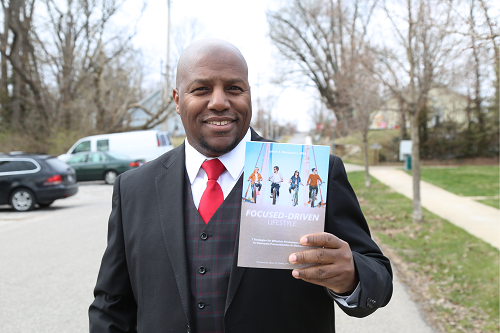

PORTLAND, OR, May 07, 2026 /24-7PressRelease/ — In fast-paced, high-pressure roles, consistency is often the first thing to break. Deadlines tighten, decisions stack up, and attention gets pulled in multiple directions. According to attorney and former Chief Deputy District Attorney Bracken McKey, staying consistent in these environments is not about working harder—it’s about building the right systems and habits that hold under pressure.
Drawing on more than 25 years of experience handling serious felony cases, McKey is sharing insights into how professionals can maintain performance when every decision feels urgent. His perspective applies far beyond the legal field, offering practical lessons for leaders, operators, and professionals across industries.
“Pressure doesn’t create new habits—it exposes the ones you already have,” said McKey. “When things speed up, you fall back on whatever system you’ve built. If there isn’t one, you end up reacting instead of deciding.”
Consistency Starts Before the Pressure Hits
McKey emphasizes that consistency is not built in the moment—it is built in advance. Professionals who perform well under pressure rely on clear standards, structured decision-making, and disciplined routines that reduce variability.
Research supports this approach. Studies on decision fatigue show that as the number of decisions increases, the quality of those decisions declines. Without a system in place, individuals are more likely to rely on shortcuts, react impulsively, or prioritize what feels urgent over what actually matters.
“By the time you feel the pressure, it’s too late to figure out how you’re going to handle it,” McKey explained. “You need a way of working that holds up when things get busy.”
Urgency Is Not the Same as Importance
One of the most common challenges in high-pressure roles is the tendency to treat all incoming tasks as equally urgent. McKey notes that this leads to scattered attention and inconsistent results.
“Everything can feel urgent when it shows up at once,” he said. “The people who stay consistent are the ones who can quickly decide what actually needs attention and what doesn’t.”
Studies suggest that a significant portion of workplace interruptions are not time-sensitive, yet they are often handled immediately. This creates unnecessary disruption and reduces overall effectiveness.
McKey advises that professionals develop a simple filtering approach to separate critical decisions from those that can wait, helping maintain focus even in fast-moving environments.
Structure Reduces Stress and Improves Performance
Consistency under pressure is not about eliminating interruptions. It is about creating structure that allows work to continue despite them.
McKey points to the importance of:
-Clear priorities that remain stable throughout the day
-Defined decision standards that do not change under pressure
-Simple systems to track tasks and reduce mental load
“When you don’t have structure, every decision feels like it needs to be figured out from scratch,” he said. “That’s where inconsistency comes in.”
Research in cognitive psychology shows that external systems—such as written task lists and structured workflows—help reduce mental strain and improve decision accuracy.
Small Decisions Drive Long-Term Results
According to McKey, consistency is not determined by major moments. It is built through small, repeatable decisions made over time.
“Most outcomes aren’t decided by one big call,” he said. “They’re shaped by a series of smaller decisions that either hold together or don’t.”
This perspective reflects a broader trend seen across industries, where sustained performance is linked to disciplined habits rather than occasional high effort.
A Practical Approach Across Industries
While McKey’s experience comes from the legal field, his insights apply to any profession where decisions are frequent and consequences matter.
Whether in business, healthcare, public service, or operations, the same principles hold:
-Focus on process, not just outcomes
-Build systems that reduce variability
-Prioritize clearly under pressure
-Maintain discipline in routine decisions
“Consistency is what people rely on,” McKey said. “It’s what holds when things don’t go as planned.”
Call to Action
Professionals are encouraged to take one simple step this week: identify one decision they make repeatedly under pressure and define a clear, repeatable approach for handling it. Small changes in how decisions are made can lead to more stable outcomes over time.
About Bracken McKey
Bracken McKey is an attorney and the owner of McKey Law in Washington County, Oregon. He brings more than 25 years of legal experience, including serving as Chief Deputy District Attorney, where he handled many of the region’s most serious and high-profile felony cases. His work has focused on complex prosecutions, decision-making under pressure, and long-term case strategy. Today, he applies that experience in private practice, advising clients with a focus on preparation, discipline, and practical judgment.
—
For the original version of this press release, please visit 24-7PressRelease.com here
Legal Disclaimer: The content on this page is syndicated from independent third-party providers. Kyrion Media makes no warranties or representations regarding the accuracy, completeness, legality, or reliability of the information, including text, images, videos, or licenses. If you are affiliated with this content or have any complaints, copyright concerns, or requests for removal, please contact us at retract@kyrionmedia.com with the specific URL of the content in question. We will review and address valid requests promptly.