
KNOXVILLE, TN, June 10, 2026 /24-7PressRelease/ — Objective
Since the introduction of the Da Vinci® robotic system, robot-assisted colon resection has gained popularity because of its the potential technical advantages. Recently, two new CE-marked platforms have become available in Europe: Hugo™ RAS and Versius®. We present the first prospective case series comparing these three robotic systems.
Methods
This exploratory, prospective study enrolled 45 consecutive adult patients undergoing robotic colon resection between February and December 2024, as part of the COMPAR trial. Two experienced colorectal surgeons performed all procedures across two surgical units. Each robotic platform was used in 15 cases. The primary outcomes were conversion to laparoscopy or open surgery and intra-operative complications. The secondary outcomes included post-operative recovery, oncological results, and platform-specific technical parameters.
Results
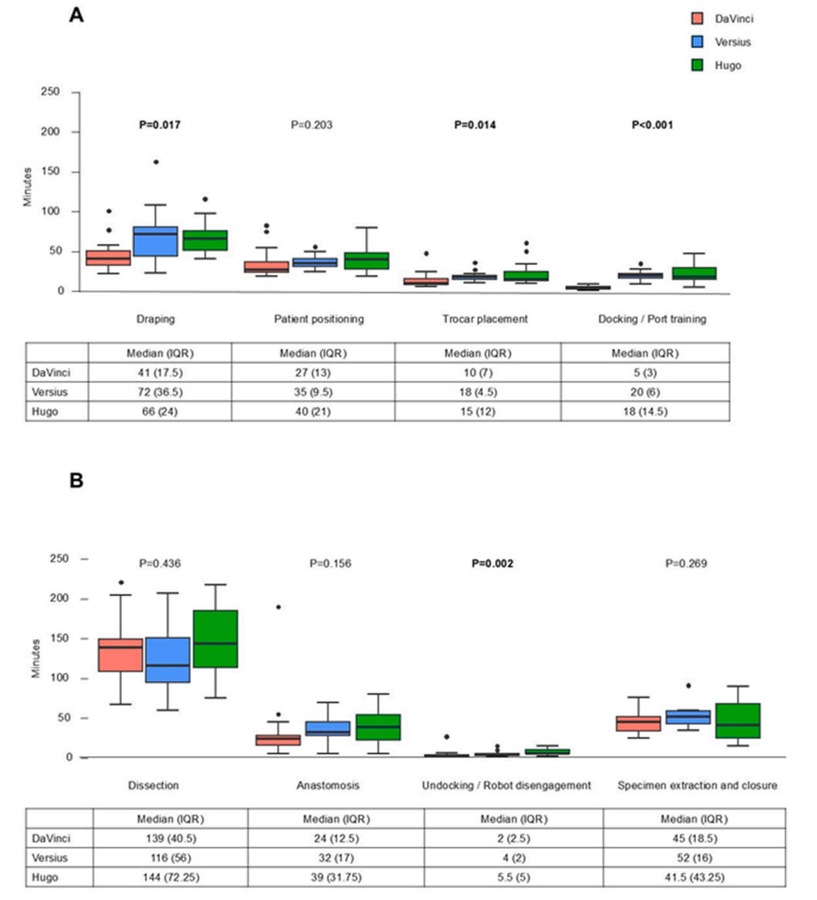
The mean age was 66.8 years and 68.9% of patients underwent surgery for colon cancer. No conversions occurred in the Da Vinci group, whereas 2 and 3 conversions to laparoscopy were recorded with Hugo™ RAS and Versius®, respectively. One intra-operative instrument malfunction occurred with Hugo™ RAS, and one surgical complication was reported in each group. No significant differences emerged in post-operative recovery or oncological outcomes. Versius® cases required more frequent use of laparoscopic energy devices (p < 0.001). Hugo™ RAS was associated with a longer total operating room time (p = 0.022) and longer incision length (p = 0.005).
Conclusion
Robotic colorectal surgery with all three platforms is feasible when performed by expert surgeons. While early outcomes are encouraging, larger comparative trials are needed to confirm differences in recovery and oncological efficacy.
References
DOI
10.1016/j.lers.2025.10.001
Original Source URL
https://doi.org/10.1016/j.lers.2025.10.001
About Laparoscopic, Endoscopic and Robotic Surgery
Laparoscopic, Endoscopic and Robotic Surgery (LERS) is an academic journal dedicated to advancing the field of minimally invasive surgery. It publishes high-quality original articles, reviews, editorials, and correspondences on innovative techniques. The journal covers a broad range of clinical research across multiple specialties, including General Surgery, Thoracic Surgery, Urology, Neurosurgery, Gynecology & Obstetrics, Gastroenterology, Orthopedics, Colorectal Surgery, and Otolaryngology. Beyond clinical studies, the journal also focuses on basic research in minimally invasive surgery, the development of surgical techniques and equipment, and the application of laparoscopy, endoscopy, robotic systems, and medical imaging. Additionally, it promotes the evolution of medical education in this rapidly growing field. The journal aims to serve as a premier platform for researchers, clinicians, and educators to exchange knowledge and foster academic development in minimally invasive surgery worldwide.
Chuanlink Innovations, where revolutionary ideas meet their true potential. Our name, rooted in the essence of transmission and connection, reflects our commitment to fostering innovation and facilitating the journey of ideas from inception to realization.
Related Link:
http://chuanlink-innovations.com
—
For the original version of this press release, please visit 24-7PressRelease.com here
Legal Disclaimer: The content on this page is syndicated from independent third-party providers. Kyrion Media makes no warranties or representations regarding the accuracy, completeness, legality, or reliability of the information, including text, images, videos, or licenses. If you are affiliated with this content or have any complaints, copyright concerns, or requests for removal, please contact us at retract@kyrionmedia.com with the specific URL of the content in question. We will review and address valid requests promptly.